
Mt Fuji Private Tour: Quick Summary
If you are short on time, here is what you need to know before reading further. All figures below are sourced from third-party booking platforms and should be treated as indicative ranges rather than fixed prices.
| Detail | Typical Range |
|---|---|
| Price per group | $300 – $800 USD (day trip) / higher for summit climbs |
| Duration | 8 – 12 hours (day trip); 2 days for summit climbs |
| Group size | 1 – 8 people per booking |
| Pickup included | Yes — hotel pickup in Tokyo or agreed meeting point |
| Guide language | English (other languages available with select operators) |
| Booking lead time | 4 – 6 weeks recommended; 8+ weeks for peak season |
| Availability | Sightseeing: year-round. Summit climbing: July – early September |
| Entry fees | Typically not included — check operator's booking page |
Prices are sourced from third-party booking platforms and are subject to change. Verify current pricing on the operator's website before booking.
Why Choose a Private Tour Over a Group Tour?
Group tours are the most popular and affordable way to visit Mt Fuji from Tokyo. However, a private tour offers a fundamentally different experience, and for the right traveller it is often the better choice.
The Core Differences
On a group tour, you share a bus with 20 to 50 other travellers, follow a fixed schedule, and spend time at stops that may not align with your interests. A private tour means the vehicle, the guide, and the entire itinerary are reserved for your group alone.
This distinction matters in practical terms: you depart when it suits you, linger longer at places you enjoy, and skip stops that do not interest you. For photographers, families with young children, or travellers with mobility considerations, this flexibility alone justifies the higher cost.
Key Advantages of a Private Tour
- Your own schedule: Choose your departure time, pace, and order of stops.
- Direct guide access: Your guide's full attention is on your group, not 40 strangers.
- Better for children: No pressure to keep up with a group, with toilet and food breaks on demand.
- Comfort: A private vehicle means no strangers beside you on long mountain roads.
- Specialised interests: Serious photographers, hikers, or culinary travellers can tailor the day entirely.
- Language flexibility: Easier to have genuine conversations and ask detailed questions.
When a Group Tour Makes More Sense
A shared group tour is a perfectly reasonable choice if you are travelling solo on a budget, are happy to follow a fixed schedule, or want the social energy of meeting other travellers. Group tours typically cost 60–80% less per person and cover the same core highlights.
What Is Typically Included in a Mt Fuji Private Tour
Inclusions vary between operators, so always read the booking page carefully. That said, most reputable private Mt Fuji tours include a consistent set of core services.
✓ Usually Included
- English-speaking, licensed guide for the full day
- Private vehicle (sedan, minivan, or minibus depending on group size)
- Hotel pickup from central Tokyo, Shinjuku, or Shibuya
- Hotel drop-off at the end of the tour
- Driver (separate from guide, for larger vehicles)
- Itinerary planning and local knowledge
- Toll road fees and parking fees for the vehicle
✗ Usually Not Included
- Mt Fuji 5th Station entry fee / climbing access fee (¥2,000 per person as of 2024)
- Meals and drinks
- Personal travel insurance
- Climbing gear (available to rent separately)
- Gratuities (not obligatory in Japan, but appreciated)
- Additional entrance fees for Hakone, ropeway, museums
A Note on English-Speaking Guides
The quality and depth of English varies between operators. When browsing tours, check guest reviews specifically for comments on language ability and communication. The best guides are not just fluent — they bring historical and cultural context that transforms a scenic drive into a genuine learning experience.
Some operators offer guides who are also certified mountain guides or naturalists with deep knowledge of Fuji's volcanic geology, Shinto significance, and ecological zones. If this matters to you, ask explicitly when booking.
Types of Mt Fuji Private Tours
Private tours fall into several distinct categories. Understanding these helps you narrow down your search and identify which type of experience you are actually looking for.
☀ Sightseeing-Only Private Tours
The most popular type. A private vehicle and guide take you to Mt Fuji's 5th Station (approx. 2,300 m elevation) for views, photos, and a walk around the area. Typically combined with stops at Kawaguchiko, Chureito Pagoda, Oshino Hakkai, or Hakone.
- Duration: 8 – 10 hours
- Physical effort: minimal
- Suitable for: all ages and fitness levels
- Available: year-round (weather permitting)
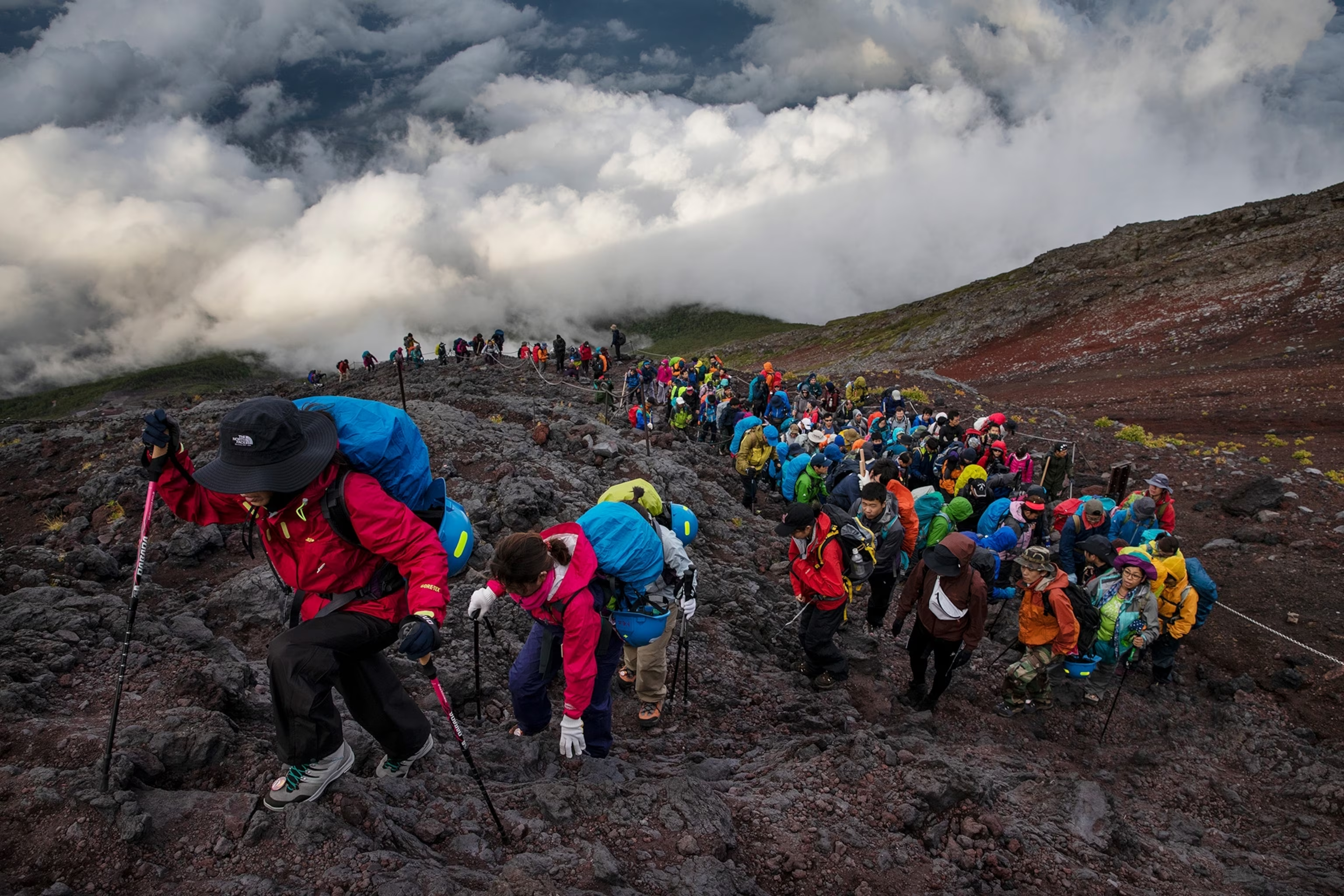
⛰ Private Climbing Tours
A private guide leads your group on a summit attempt. This is the most physically demanding option and requires basic fitness. Most private climbing tours follow the Yoshida Trail and include an optional overnight stay at a mountain hut for the sunrise.
- Duration: 1 day (no summit) or 2 days
- Physical effort: high
- Suitable for: fit adults; teens with preparation
- Available: July – early September only
📷 Photography-Focused Private Tours
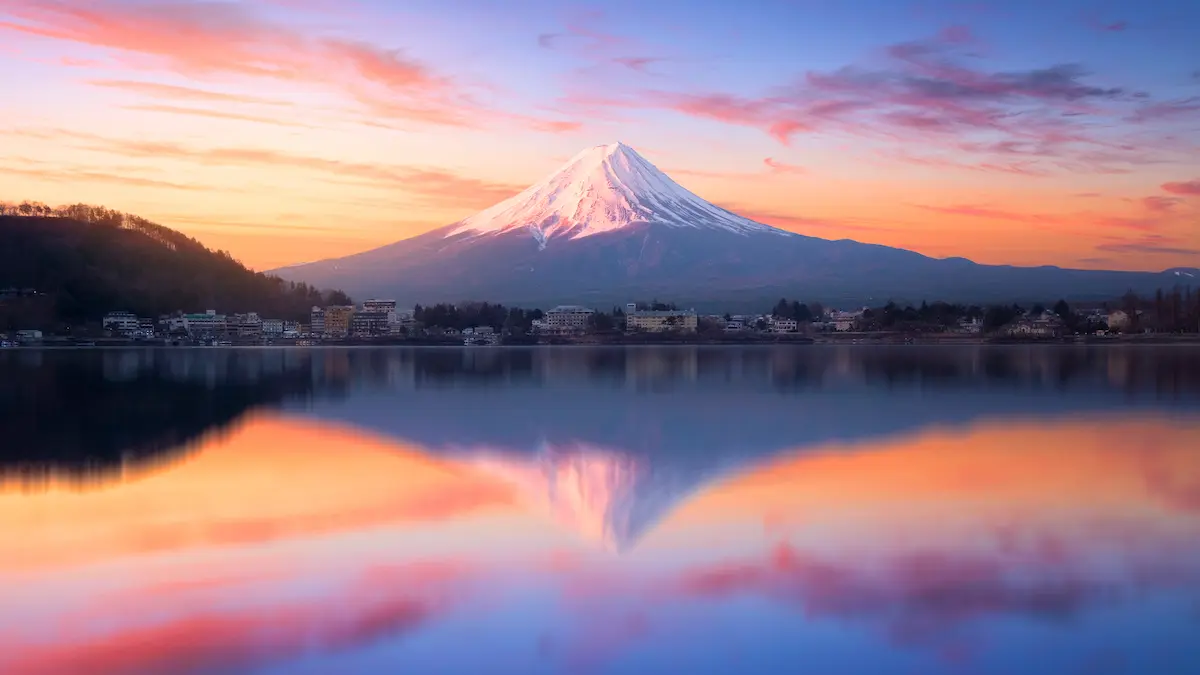
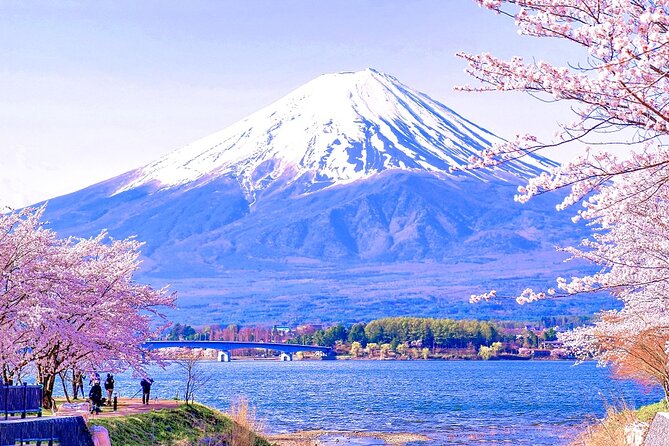
Designed around capturing Mt Fuji at its most photogenic. Guides are chosen for their knowledge of viewpoints, light conditions, and seasonal features such as cherry blossoms (spring), snow caps (winter and spring), or autumn foliage at Kawaguchiko.
- Duration: flexible — often early morning or pre-dawn starts
- Key spots: Chureito Pagoda, Kawaguchiko north shore, Oshino Hakkai
- Suitable for: enthusiasts and professionals
- Available: year-round, season-dependent
👪 Family-Friendly Private Tours
Adapted for families with children, including child seats in vehicles, stops at interactive sites (Fujikyu Highland, the Fuji Visitor Centre), and a relaxed pace with no pressure to match a group schedule. Guides with experience around children are available through select operators.
- Duration: 8 – 10 hours
- Physical effort: low
- Suitable for: all ages including toddlers
- Available: year-round
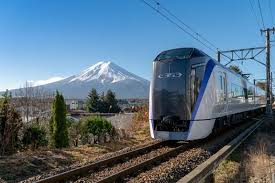
Private Tour vs Group Tour vs Self-Guided: Full Comparison
The right approach depends on your budget, group composition, and how much flexibility matters to you. Here is a straightforward side-by-side comparison.
| Factor | Private Tour | Group Tour | Self-Guided |
|---|---|---|---|
| Cost per person | High (lower per head for larger groups) | Low – moderate | Lowest |
| Flexibility | ✓ Full itinerary control | Fixed schedule | ✓ Complete freedom |
| Guide included | ✓ Dedicated guide | ✓ Shared guide | None |
| Hotel pickup | ✓ Included | Usually from set point (e.g. Shinjuku) | Self-arranged |
| Language support | ✓ Full attention from guide | Group-paced explanations | None — Japanese signage |
| Good for families | ✓ Ideal | Manageable | Challenging with young children |
| Good for photographers | ✓ Flexible timing and stops | Limited stop time | Flexible, but no local knowledge |
| Booking complexity | Simple — one booking covers everything | Simple | Requires research: transport, access permits, maps |
| Transportation | Private vehicle | Shared coach | Public bus (Shinjuku–5th Station: approx. ¥3,000 return) |
Best Timing and Seasonal Considerations
Mt Fuji looks different in every season, and your timing affects both what you can do and how much you pay. Here is a practical breakdown by month.
| Season | Conditions | Private Tour Notes |
|---|---|---|
| January – March | Snow-capped peak, clear winter skies, cold temperatures at low elevations | Sightseeing tours operate; summit access closed. Best for iconic snow-capped photos from Kawaguchiko. |
| April – May | Cherry blossom season (late March – early May), mild temperatures | Peak demand for photography tours. Chureito Pagoda with Fuji in the background is extremely popular. Book 6+ weeks ahead. |
| June | Rainy season — cloud cover is frequent | Fewer crowds; lower prices from some operators. Summit not yet open. Hit-or-miss visibility. |
| July – early August | Official climbing season opens; warm, humid, busy | Highest demand for all tour types. Book as early as possible. Daily entry cap on Yoshida Trail: 4,000 people. |
| Late August – early September | Crowds thin slightly; some afternoon thunderstorms | Good window for summit climbs with a private guide. Last weeks of the official season. |
| October – November | Autumn colours at Kawaguchiko; snow appears on summit by late October | Excellent for sightseeing and photography. Summit closed. Comfortable temperatures. |
| December | Cold, clear days; early snow | Quiet season, fewer tour operators active. Good for visitors wanting uncrowded access. |
What About Weekday vs Weekend?
For group tours, weekends typically mean more traffic on the highway and busier rest stops. For private tours, the vehicle and itinerary are yours regardless — but the 5th Station itself will be more crowded on weekends, particularly in July and August. If you have flexibility, a Tuesday to Thursday departure typically offers a noticeably quieter on-mountain experience.
How to Save Money on a Mt Fuji Private Tour
Private tours carry a premium over group options by definition, but there are several practical strategies to reduce the cost without sacrificing the experience.
👥 Increase Your Group Size
Private tours are priced per group, not per person. A tour that costs $500 for two people costs $62.50 each if split among eight. If you are travelling with friends or family, adding even one or two more people to your group significantly reduces the per-person cost.
At groups of five or more, a private tour often becomes competitive in per-person terms with a premium group tour.
📅 Travel in the Shoulder Season
Operators frequently offer lower prices during June (rainy season), October, and November compared to peak summer months. If summit climbing is not your goal, an October private sightseeing tour with autumn foliage can be both more affordable and more visually striking than a crowded July trip.
Late September, after the official climbing season closes, also sees reduced demand and potentially lower prices.
⏰ Book Early
Many booking platforms offer an early booking discount — typically 5–10% off — for reservations made 30 days or more in advance. This is especially valuable for peak-season travel when availability is tight. Look for platforms that offer free cancellation as a standard feature so early booking carries no risk.
🗺 Trim the Itinerary
Longer itineraries with more stops cost more. If your primary goal is Mt Fuji itself rather than a grand Fuji-Hakone-Kawaguchiko loop, a focused half-day or eight-hour tour will typically be considerably less expensive than a full 12-hour multi-destination package.
Conversely, combining destinations (such as adding Hakone) into a single day can be more economical than booking separate tours.
Customisation Options: Building Your Ideal Itinerary
One of the clearest practical advantages of a private tour is the ability to customise your day. Most operators allow pre-booking customisation via a brief message or form. Here are the most commonly requested additions and adjustments.
Add Hakone
Hakone is a natural pairing with Mt Fuji. Located roughly 30 km south of Kawaguchiko, it offers a very different landscape: volcanic hot springs, the Hakone Open-Air Museum, Lake Ashi with views of Fuji, and the Owakudani sulphur vents. Many operators offer a Fuji-Hakone combination as a standard itinerary, or will add a Hakone stop for an additional fee.
Note that a combined Fuji-Hakone day is long — expect 10 to 12 hours minimum. Prioritise based on what genuinely interests you rather than trying to see everything.
Add the Fuji Five Lakes (Fujigoko)
The five lakes north of Mt Fuji — Kawaguchiko, Yamanakako, Saiko, Shojiko, and Motosuko — each offer a different perspective on the mountain and its surroundings. Kawaguchiko is the most visited and accessible. Saiko and Shojiko are quieter and favoured by photographers for their undeveloped shorelines.
A private guide can take you to the specific lake that best matches your interests rather than defaulting to Kawaguchiko, which is typically the only stop on group tours.
Add an Onsen Stop
Ending a long day at Mt Fuji with a hot spring bath is a deeply satisfying combination. Several ryokan and day-use onsen facilities near Kawaguchiko and Fuji Kawaguchiko offer Fuji-facing baths. Your guide can recommend options based on your preference for public baths, private baths, or indoor versus outdoor settings. Budget ¥1,000–3,000 per person for day-use entry.
Early Morning or Pre-Dawn Starts
For photographers and those wanting to avoid peak-hour crowds at the 5th Station, a departure from Tokyo at 4:00–5:00 AM is worth considering. Your private tour guide can arrange this start time, whereas group tours typically depart at 7:00–8:00 AM. Arriving at the 5th Station before 9:00 AM means you beat the bulk of the day-trip crowd by an hour or more.
Cultural and Historical Add-Ons
The Fuji area has significant religious and cultural heritage. Sengen shrines connected to Fuji worship are found throughout the region. The historic Tokaido road passes nearby, and the village of Oshino Hakkai — known for its eight crystal-clear spring ponds fed by snowmelt from Fuji — is a frequently requested stop for travellers interested in traditional rural Japan.
Expert Opinion: What to Prioritise When Booking
After years of researching Mt Fuji tours and talking to travellers who have done them, a few consistent pieces of advice stand out.
Guide quality matters more than vehicle quality. A knowledgeable, engaging guide who speaks clear English will make the day genuinely memorable. A less fluent guide in a nicer minivan will not. Read reviews carefully and look for comments specifically about the guide, not just the overall experience.
Set realistic expectations about the weather. Mt Fuji is only clearly visible a fraction of days per year. Clouds and mist are the norm, especially in summer afternoons. The mountain's base, lakes, and surrounding scenery are still beautiful on overcast days — but if you are building the entire trip around a clear summit view, consider the probabilistic nature of mountain weather.
Confirm the cancellation policy before you book. Weather cancellations are common. A good private tour operator will offer either a full refund or a free reschedule if Mt Fuji is not visible due to weather. Operators who do not clearly state this policy are a yellow flag.
The 5th Station is not the summit. First-time visitors sometimes assume a "Mt Fuji tour" means reaching the top. Most private sightseeing tours stop at the 5th Station at roughly 2,300 m, which is still an impressive elevation with excellent views — but it is less than two-thirds of the way up the mountain. If you want to reach the summit crater at 3,776 m, you need to book specifically a climbing tour.
— mtfuji.tokyo editorial teamPractical Logistics: What to Expect on the Day
Pickup and Meeting Points
Most private tours offer hotel pickup from central Tokyo, typically from Shinjuku, Shibuya, Ginza, or Asakusa. Some operators use a designated meeting point rather than door-to-door pickup — this is usually a clearly marked location within a short walk of major hotels. Confirm the exact pickup location and time 24–48 hours before your tour.
What to Bring
For a sightseeing-only private tour, pack light. The following is recommended:
- Comfortable walking shoes (the 5th Station area involves uneven terrain)
- A warm layer — even in summer, the 5th Station can be 10–15°C cooler than Tokyo
- Sun protection: sunscreen, sunglasses, and a hat (UV exposure is high at elevation)
- Cash in Japanese yen for meals, souvenirs, and toilet fees (¥100–200 per use at the 5th Station)
- Water — buy before you arrive; vending machines at the 5th Station charge a premium
- Passport or ID (some operators require it)
Altitude and Health
The 5th Station sits at approximately 2,300 m above sea level. Most healthy adults experience no symptoms at this altitude, but some people feel mildly light-headed, short of breath, or fatigued — particularly if ascending quickly by vehicle. Drink water regularly, avoid alcohol the day before, and allow time to acclimatise before any strenuous activity.
For climbing tours ascending to 3,776 m, altitude sickness (acute mountain sickness) is a genuine risk. Symptoms include headache, nausea, and dizziness. Your private guide will manage the ascent pace and recognise symptoms — always follow their guidance, including the recommendation to descend if symptoms worsen.
Communications and Network
Mobile network coverage on the Subaru Line and at the 5th Station is generally good with major Japanese carriers and most international SIM cards. Above the 7th Station, coverage becomes intermittent. If you are relying on your guide for emergency communication, ensure they have a local SIM or registered Japanese number.
Frequently Asked Questions
Private tour prices typically range from around $300 to $800 USD per group for a standard sightseeing day trip. Summit climbing private tours, which involve an overnight stay in a mountain hut and a longer commitment from the guide, tend to sit at the higher end or above this range. Prices are set by third-party booking platforms and operators and may change seasonally. Always confirm the current price on the operator's official booking page before finalising your plans.
Most private tours include a dedicated English-speaking guide, hotel pickup and drop-off in Tokyo, and transportation in a private vehicle. Toll and parking fees for the vehicle are typically covered. Items usually not included are the Mt Fuji entry/access fee (¥2,000 per person as of 2024), meals, personal travel insurance, and climbing gear. Read the specific inclusions on each operator's booking page carefully, as these vary.
Most operators accommodate groups of 1 to 8 people in a standard private tour format. Groups of 9 or more typically require a minibus arrangement, which may be quoted separately. The private tour price is usually set per group rather than per person, so larger groups get significantly better per-person value.
Yes — itinerary flexibility is one of the primary advantages of booking privately. Most operators allow you to request adjustments before the tour, such as adding a Hakone stop, changing the departure time, prioritising specific viewpoints, or including an onsen visit. Use the messaging or special requests field at booking time to outline your preferences, and confirm details with the operator before your tour date.
For families with children, couples with specific interests, or groups of three or more people, a private tour generally offers better value in terms of flexibility, comfort, and personal attention. The per-person cost premium over a group tour narrows significantly as your party size increases. Solo travellers and budget-conscious pairs will usually find a group tour to be the more economical choice for covering the same core highlights.
For sightseeing tours, private tours operate year-round, with spring (cherry blossom season, late March to early May) and summer being the most popular and most competitive for availability. For summit climbing tours, the official season runs from early July to early September. Booking at least four to six weeks in advance is recommended for peak months; eight or more weeks ahead is advisable for a July or August climbing tour.
Ready to Plan Your Mt Fuji Private Tour?
Browse available private tours, compare itineraries and inclusions, and book directly through a trusted third-party platform. Availability moves quickly in peak season — checking early is always worthwhile.
Browse Private Tours ➔Tours are listed and managed by third-party operators. Prices and availability are subject to change.